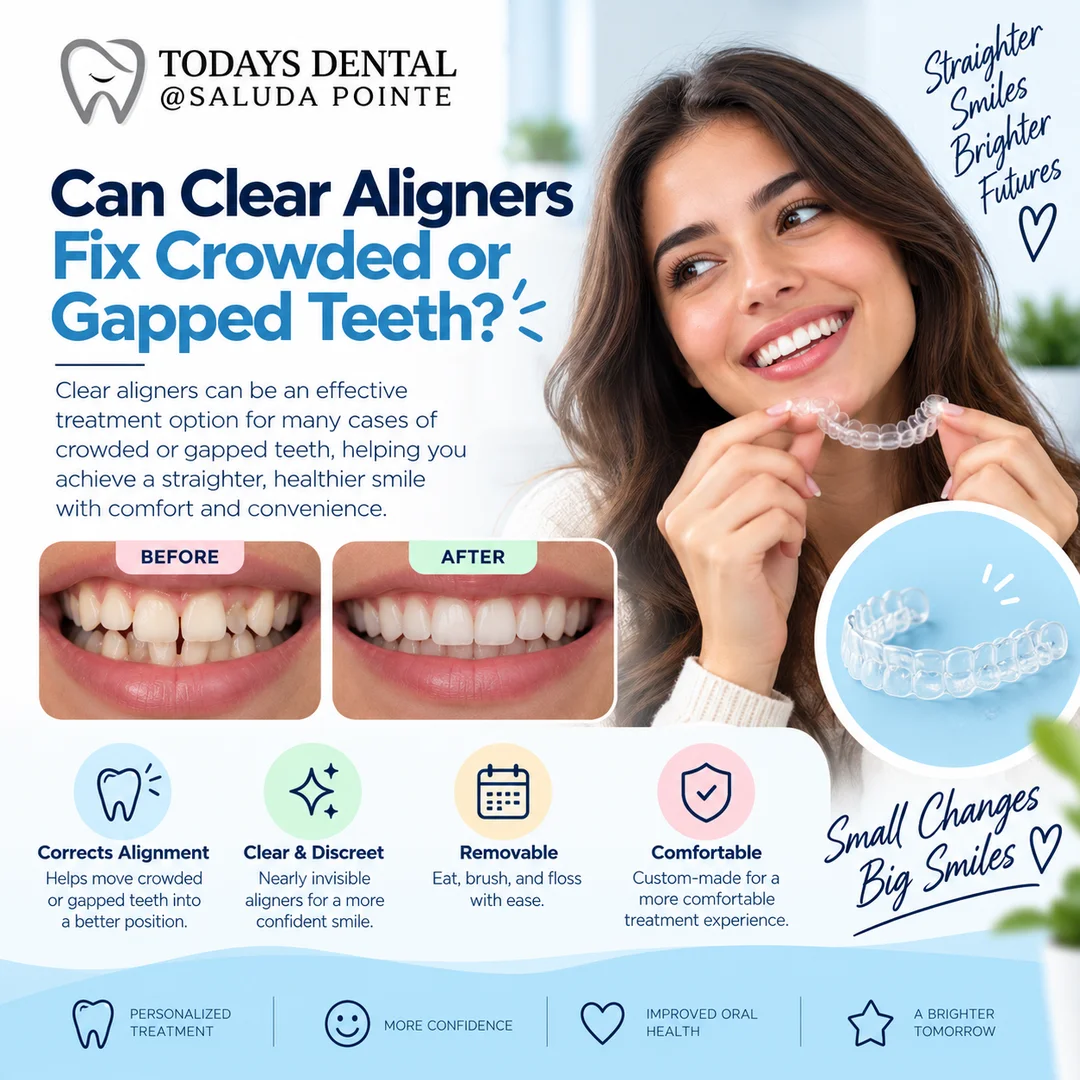
Many people worry about crowded or gapped teeth. They fear a crooked smile, trouble chewing, or low confidence. They want to know if clear aligners can fix the problem without metal braces.
Clear aligners, like Invisalign, can treat many mild to moderate cases of crowding and gaps. They move teeth slowly with a series of clear trays. Here you will know how aligners work, when they help, and what to expect during treatment.
Clear aligners gently nudge overlapping teeth into their proper spots. They work best for mild to moderate crowding, guiding each tooth with precision over time.
A patient felt pressure the first week. The trays moved teeth little by little.
Following the gradual realignment of overlapping teeth, clinicians tackle mild to moderate crowding next. Invisalign and other clear aligners shift teeth slowly to open space and improve the dental arch.
Providers often use interproximal reduction, or IPR, to trim tiny amounts of enamel and create room. This helps avoid tooth extraction in most cases.
Clear aligners work without wires and brackets, so the treatment stays discreet. Orthodontists build a treatment plan that moves teeth step by step. Treatment time varies by severity, so some cases finish in months and others take longer.
The approach treats crowding, overbites, and other misalignment issues while keeping the smile presentable.
Clear aligners slowly close the spaces between teeth. They shift the teeth into their proper positions for a better smile.
A dentist recalled treating many patients with gaps using Invisalign. Treatment moved teeth slowly and predictably.
After closing the gaps between teeth, maintaining proper alignment becomes crucial. Clear aligners work by gradually repositioning teeth for a better fit in the dental arch. Regularly wearing these aligners helps keep teeth from shifting back to their old places.
Orthodontists may recommend retainers after treatment to ensure lasting results. These tools provide extra support and maintain that beautiful smile they created. Patients should follow their orthodontist's guidance closely during this stage for optimal results.
Clear aligners offer a discreet way to straighten teeth. They fit comfortably and blend into daily life, making them easy to wear without feeling self-conscious.
Clear aligners offer a subtle solution for those wanting to fix their teeth. Without wires and brackets, they provide an unobtrusive way to straighten smiles. Many people find them much more comfortable than traditional braces. The smooth plastic feels gentle against the gums, creating less irritation during treatment.
These aligners blend seamlessly into everyday life. Users can smile confidently without worrying about noticeable metal fixtures. Comfort remains a priority throughout the journey, as clear aligners adjust gradually over time for effective results while keeping aesthetics in mind.
After enjoying a discreet fit and comfort, patients often ask about upkeep and daily routine.
| Point | Summary |
|---|---|
| Removability | Aligners come out for eating and cleaning. Patients remove them for meals. A patient reported rinsing trays and brushing teeth before reinserting each time. |
| No wires or brackets | Treatment uses no wires and no brackets. Fewer hardware issues occur. Fewer emergency office visits follow. |
| Oral hygiene | Brushing and flossing stay simple. Teeth receive full attention each day. A patient said plaque dropped after switching to aligners. |
| Cleaning aligners | Cleaning requires a soft brush and warm water or cleaning crystals. Daily care prevents odors. Simple steps keep trays clear and comfortable. |
| Professional adjustments | Orthodontists guide progress with scheduled checkups. Fewer in-person visits often occur than with braces. Appointments focus on fit and the next set of trays. |
| IPR and space management | Orthodontists may use interproximal reduction, IPR, to make space. IPR helps treat crowding without extraction in most cases. Invisalign fixes mild to moderate crowding often without pulling teeth. |
| Versatile treatment | Aligners treat gaps, crowding, overbites, underbites, crossbites, and open bites. Teeth move slowly to create proper spacing and alignment over time. Treatment time varies with severity of the issue. |
| Aesthetic maintenance | Aligners keep a tidy look during treatment. Patients often prefer them to braces for social and work settings. The discreet option supports confidence while caring for teeth. |
| Comfort and daily life | Soft trays reduce irritation. Eating feels normal since trays are out. A patient noted fewer mouth sores than with braces. |
| Results tracking | Orthodontists track progress and adjust plans. Software and regular scans show tooth movement. Patients change trays per the schedule to keep progress steady. |
Yes, clear aligners can effectively fix crowded teeth. They gently shift your teeth into better positions over time. This method is often more comfortable than traditional braces.
Absolutely! Clear aligners are a great option for closing gaps between teeth. They work by applying pressure to move the teeth closer together.
Treatment duration varies based on individual cases; however, most people see results in about six months to two years. Your dentist will create a specific plan tailored just for you.
Yes, you should wear your clear aligners for at least 20 to 22 hours each day for optimal results. Only remove them when eating or brushing your teeth; consistency is key!
Tell us a little about what you need — we'll be in touch shortly.
105 Saluda Pointe Ct Suite C, Lexington, SC 29072, United States

Hi! I'm Tooth fairy! Your AI Assistant Ask me anything