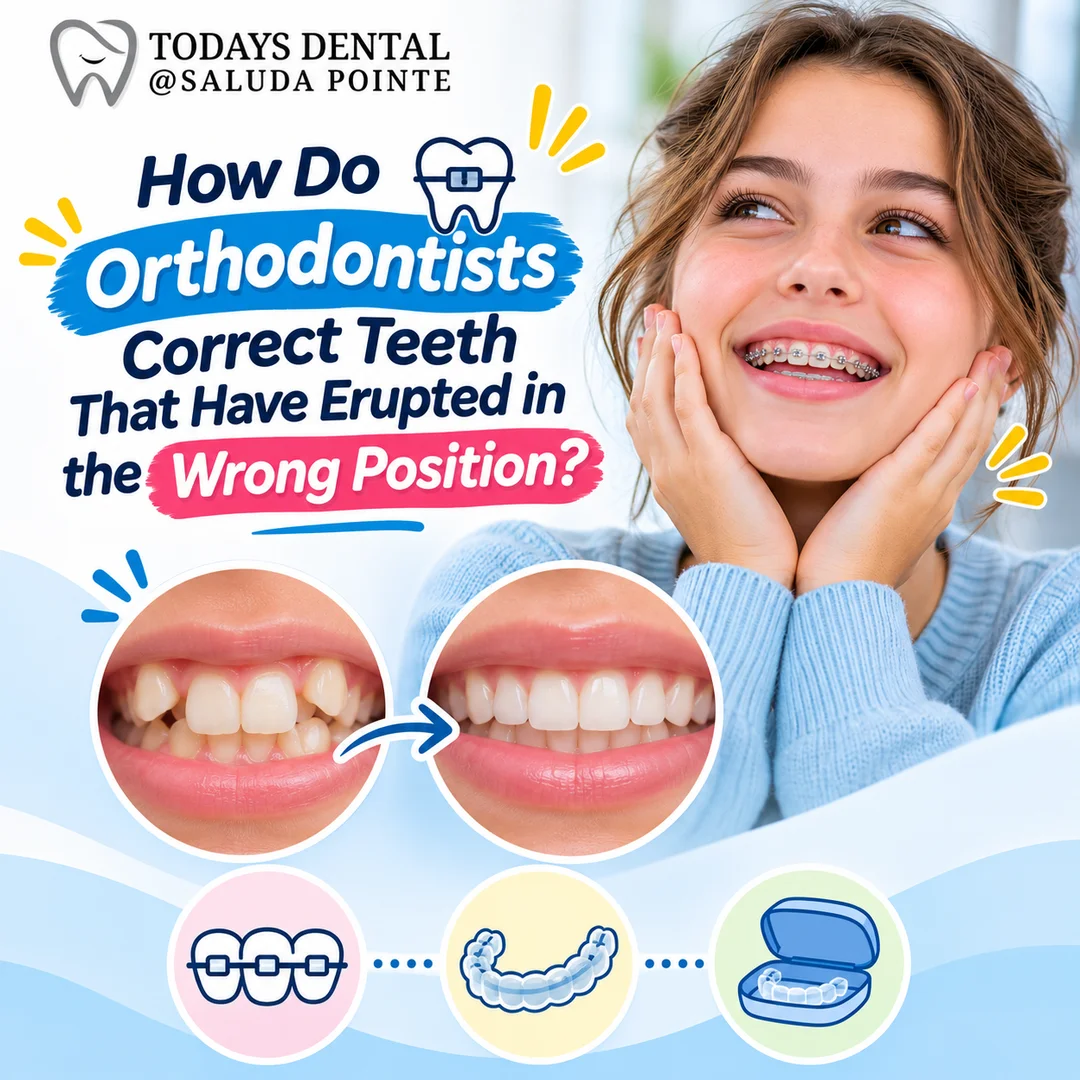
Many people spot a tooth that grew in the wrong place. It can make chewing hard and make a smile feel off. It can also sting a bit or make someone feel self conscious. A misaligned tooth can seem like a misfit in a family photo.
Metal braces are a traditional fix that doctors have used for decades to move teeth and correct bites.
It explains how braces, archwires, clear aligners, and minor surgery help guide teeth into place. It ends with why retainers matter and what can happen if treatment stops early..
Orthodontists carefully examine teeth to spot any misalignment. They use tools like X-rays, 3D scans, and dental impressions to gather detailed images of each patient's mouth.
The clinic takes detailed images of the mouth. These records guide treatment choices.
Orthodontists use various methods to fix misaligned teeth. They often start with braces, which use wires to guide teeth into the right places. Clear aligners offer a more discreet option, gradually shifting teeth without metal.
Metal braces lock brackets to teeth and use archwires to pull them into place. The wires apply steady forces that prompt the body to dissolve and rebuild the jawbone so teeth can move.
An orthodontist reported that computer-guided, mathematically optimized bracket placement moved teeth faster and with more accuracy than older methods. A patient recalled metal braces helped retract buccal teeth and procline upper incisors to fix a bite.
Clear braces serve as an alternative to metal for people who want less shine. Invisalign also works to straighten teeth, close gaps, and position lower front teeth correctly. Removing braces too soon can cause permanent teeth to miss proper alignment, and teeth can still shift after removal, often needing retainers or follow-up work. Next, clear aligners offer another option.
Clear aligners like Invisalign offer a discreet alternative to traditional metal braces. They straighten crooked teeth, close gaps, and help position lower front teeth for better tooth alignment.
An orthodontist who has fitted hundreds of cases said computer planning maps each tooth move and speeds treatment compared to older methods.
Patients wear a series of trays that nudge teeth and prompt the body to dissolve and rebuild jawbone, the same biology that lets braces work. A patient recalled finishing aligner treatment, then needing a retainer after mild shifting, which shows why retainers matter.
Clear aligners help shift teeth into position. Surgical exposure and guided eruption provide a different approach for those stubborn, impacted teeth hiding beneath the gums. This method allows orthodontists to access these hidden teeth directly. They make small incisions in the gum tissue, revealing the tooth that needs attention.
Orthodontists attach braces or custom appliances to guide the impacted tooth into its proper place over time. This process can take several months but often yields excellent results.
Proper alignment improves both aesthetic appearance and bite function as well as overall dental health. Addressing impacted teeth effectively reduces future issues like jaw misalignment and other crowding problems within the oral cavity.
Retainers play a crucial role in keeping teeth aligned after orthodontic treatment. After removing braces, some people may notice their teeth shifting back to their original positions.
To tackle this problem, orthodontists recommend retainers. These devices help maintain the new tooth alignment and prevent any unwanted movement.
Orthodontic treatment improves dental health and bite function, but the work doesn’t stop once braces come off. Some misaligned teeth might try to revert to their old spots if not properly supported by retainers.
Adding a retainer into daily routines can help ensure long-lasting results after braces or clear aligners have done their job.
Orthodontists use braces or clear aligners to move teeth into the right position. They apply gentle pressure over time, guiding the teeth to where they should be.
Braces consist of brackets and wires that work together to shift teeth gradually. The brackets attach to each tooth, while the wires connect them; this combination helps realign your smile.
Yes, there are alternatives like clear aligners and retainers. Clear aligners are removable and less noticeable than traditional braces; they can also effectively correct misalignment.
Treatment time varies based on individual needs, but most people wear braces or aligners for about 12 months to three years. Regular visits help track progress and make adjustments as needed for optimal results.
Tell us a little about what you need — we'll be in touch shortly.
105 Saluda Pointe Ct Suite C, Lexington, SC 29072, United States

Hi! I'm Tooth fairy! Your AI Assistant Ask me anything