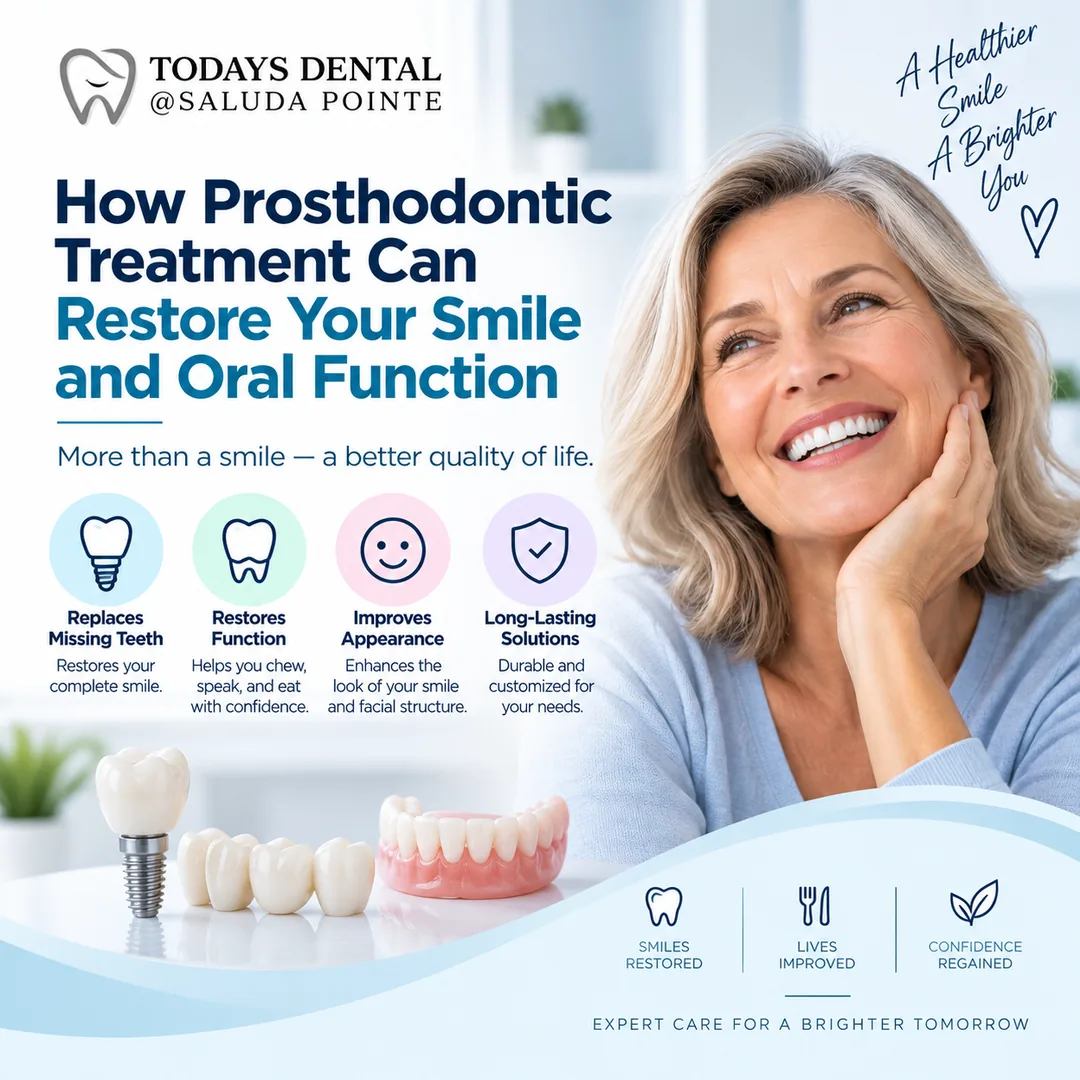
Many people lose teeth from injury, decay, or wear. They may have trouble chewing, speaking, or smiling. They may hide their teeth and lose confidence.
A prosthodontist restores and replaces missing teeth to bring back function and appearance. Here you will know how implants, crowns, bridges, dentures, and veneers help.
Prosthodontic treatment focuses on restoring teeth and oral function. Prosthodontists specialize in the diagnosis, restoration, and replacement of missing teeth.
Crowns and other restorations rebuild damaged tooth structure. They restore the original shape, size, and functionality of teeth. This work falls under prosthetic dentistry and oral rehabilitation. Dental restoration helps with tooth replacement and functional occlusion.
Clinicians use dental implants, bridges, and dentures to replace missing teeth. Prosthodontic restorations look natural and function well alongside implants. Crowns strengthen teeth and let patients chew, smile, and speak with more comfort.
Treatment improves oral health and restores comfort and function. Patients gain enhanced appearance and self-confidence from smile enhancement.
Prosthodontic treatment rebuilds teeth and fills gaps from missing teeth. Skilled dentists use advanced techniques to create a natural-looking smile that boosts confidence.
Dental implants play an essential role in restoring missing teeth. They provide a strong foundation for replacement teeth, acting like natural tooth roots. This treatment option enhances oral function and improves overall comfort.
Prosthodontists place the titanium post into the jawbone. Over time, this post fuses with the bone in a process known as osseointegration. Once healed, dentists attach crowns to these posts, creating a natural-looking smile.
Implants offer several benefits beyond aesthetics. They help maintain jawbone health by preventing bone loss that occurs when teeth are missing. Patients can chew food comfortably and speak clearly once again after receiving implants.
The durability of dental implants often outlasts other restorations like dentures or bridges, making them an excellent long-term solution for tooth replacement.
Crowns restore damaged tooth structure by rebuilding its original shape, size, and functionality. They strengthen teeth, allowing individuals to chew and speak comfortably. Bridges serve as effective solutions for replacing missing teeth. They connect crowns on either side of a gap, filling in the space left by absent teeth.
Both crowns and bridges improve oral function significantly. Prosthodontists often recommend these treatments to enhance appearance and boost self-confidence in patients with dental issues.
Crowns work alongside implants for comprehensive restoration when needed. In summary, prosthodontic treatment through crowns and bridges supports better oral health while ensuring a more functional smile.
Moving from crowns and bridges, dentures and veneers play a significant role in prosthodontic treatment. Dentures provide a solution for missing teeth. They help restore oral function by allowing individuals to chew food comfortably. Modern dentures look natural and fit well, improving both appearance and confidence.
Veneers serve as another option for patients with damaged teeth. These thin shells cover the front surface of teeth, enhancing their aesthetic appeal. They blend seamlessly with existing teeth, offering a smile makeover without extensive procedures. Prosthodontists use these treatments to optimize oral health while ensuring functionality remains intact.
Prosthodontic care restores oral function and confidence.
| Benefit | Summary |
|---|---|
| Restored Chewing | Prosthodontists diagnose and replace missing teeth to restore chewing. Crowns rebuild damaged tooth shape, size, and function. Implants, bridges, and dentures replace lost teeth so patients can eat comfortably. |
| Improved Speech | Prosthodontic restorations help form sounds clearly. Crowns and dentures restore tooth position and support for better speech. |
| Stronger Teeth | Crowns strengthen damaged teeth. Restored teeth hold up to normal chewing forces. Patients chew, smile, and speak with more comfort and confidence. |
| Natural Look and Function | Prosthodontic restorations look natural and function well. They often work with implants for complete tooth restoration. Patients report comfortable fit and realistic appearance. |
| Better Oral Health | Replacing missing or damaged teeth improves general oral health. Bridges, implants, and dentures prevent shifting and wear on remaining teeth. Prosthodontic treatment supports long term mouth function. |
| Comfort and Confidence | Prosthodontists restore comfort through custom restorations. Patients gain enhanced appearance and self confidence after treatment. |
| Comprehensive Solutions | Prosthodontists use implants, dentures, and bridges as treatment options. They diagnose, restore, and replace teeth to restore oral function. Treatment offers improved oral health, restored function and comfort, and enhanced appearance. |
Prosthodontic treatment is a dental procedure that helps restore your smile and oral function. It focuses on replacing missing teeth with artificial ones, such as crowns, bridges, or dentures.
This treatment improves oral function by allowing you to chew food properly and speak clearly again. Replacing lost teeth makes everyday activities easier and more comfortable.
Anyone who has lost one or more teeth can benefit from this treatment. It is especially useful for people with damaged teeth or those needing full mouth restoration.
The time varies depending on the individual case and type of restoration needed. Some patients may see results within a few weeks while others may require several months for complete healing and adjustment.
Tell us a little about what you need — we'll be in touch shortly.
105 Saluda Pointe Ct Suite C, Lexington, SC 29072, United States
Hi! I'm Tooth fairy! Your AI Assistant Ask me anything