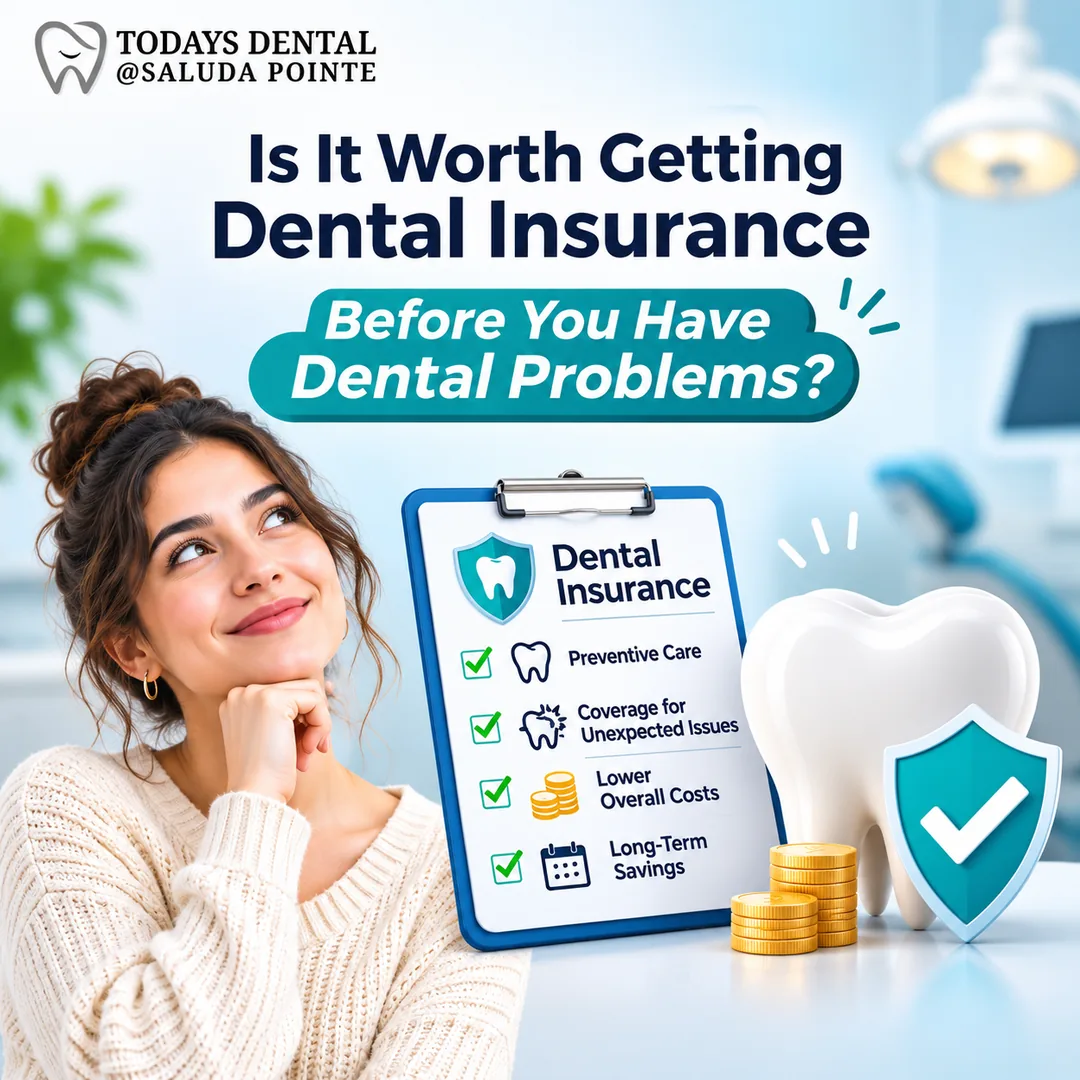
Many people search for a dentist near me only after a tooth starts to hurt. They ask if buying insurance now will save money later. They worry about costs for dental implants, emergency dentist visits, or care from a pediatric dentist. Insurance seems confusing and they want simple answers.
Most dental insurance plans cover 100% of preventive care costs. Individual dental insurance can pay for regular checkups that catch small problems early.
Dental insurance covers a range of services that keep smiles bright and healthy. From routine check-ups to major procedures, it helps manage costs when dental issues arise.
Preventive care services
Most plans cover 100% of preventive visits, cleanings, and X-rays. People who see a pediatric dentist near me or a kids dentist for regular checkups catch issues early. Early detection helps avoid costly treatments later. A patient who waits until a tooth hurts may miss warning signs and face larger bills.
Insurance typically pays about 80% for fillings and extractions, and up to 50% for major work like crowns, dentures, or oral surgery. Implants dental and full mouth dental implants or all on 4 dental implants can still leave big out-of-pocket costs, because plans do not pay everything.
Dentists charge the same fees for everyone, so having coverage with a trusted dentist office near me often lowers patient costs.
Basic procedures
Patients get 80% of the cost for fillings, extractions, and re-cementing with typical dental plans. Coverage often pays 100% of preventive care. Insurers may cover up to 50% of crowns, dentures, and oral surgery.
Dentists charge the same fees for all patients, so insurance helps cut out-of-pocket bills. Small problems can grow into large, expensive ones if left untreated.
People who wait until pain hits risk ignoring warning signs. Regular checkups help dentists spot trouble early and avoid costly treatments later. Dental insurance does not pay 100% of every procedure, so some costs still fall on the patient. Adding a plan before problems start helps lower future bills and keeps smiles healthy.
Major dental work
Major dental work can cost a lot. Dental insurance can cover up to 50% of crowns, dentures, and oral surgery. Preventive care often comes at no cost, with most plans paying 100% for checkups.
Dentists charge the same fees for everyone, so insurance can lower what a person pays out of pocket. Small problems can grow into big bills if left alone.
Early visits help dentists spot trouble. They catch issues before filling or extraction becomes a crown or surgery. Insurance usually pays 80% for fillings and extractions, but it does not pay 100% for every procedure. Waiting to buy insurance can mean overlooking warning signs. Buying insurance early can save money on future major dental work.
Dental insurance plans come in different forms. Each type has its own rules and benefits, making it essential for people to weigh their options carefully.
PPO plans
PPO plans offer flexibility in choosing dentists. Patients can see any dentist they prefer, but using an in-network provider will cost less. Most PPO plans cover 100% of preventive care costs, which includes routine checkups and cleanings. This coverage helps patients stay on top of their oral health.
These plans typically pay 80% for basic procedures, such as fillings or extractions. For major work like crowns or dentures, coverage may reach up to 50%. Early access to dental insurance means catching problems before they escalate into costly issues later. Waiting until a dental problem arises could lead to serious complications that are much more expensive down the line.
HMO/DMO plans
HMO and DMO plans offer a different approach to dental insurance. These plans often require members to choose a primary care dentist. This dentist coordinates all of the patient’s dental needs, making it easier for patients to access preventive care services.
Most preventive procedures cost nothing under these plans, which encourages regular checkups. With early detection through HMO or DMO coverage, small issues can become manageable before they turn into expensive problems.
Patients should note that these plans usually limit their choice of dentists to those within the network. Dentists get paid fixed salaries rather than charging by procedure, which helps keep costs down.
However, if someone decides to see an out-of-network provider, they might face higher fees or no coverage at all. Such restrictions might deter some individuals but can provide substantial savings on routine visits and basic procedures when used wisely.
Indemnity plans
Shifting from HMO/DMO plans, indemnity plans offer a different approach. These insurance plans allow patients greater flexibility in choosing their dentist. Patients can visit any dental provider without network restrictions.
Indemnity plans often cover 100% of preventive care costs. They typically pay around 80% for basic procedures like fillings and extractions too. For major work, such as crowns or dentures, they might cover up to 50%.
This structure helps keep out-of-pocket expenses manageable over time. Most dentists charge the same fees between insured and uninsured patients. Seeking early dental coverage can save money on potential costly treatments later on.
The cost of dental insurance includes monthly premiums, deductibles, and copays that can vary widely across different plans. Some plans may offer affordable coverage while others could hit the wallet hard.
Monthly premiums
Monthly premiums matter for anyone who wants regular dental care and lower future costs.
| Point | Summary |
|---|---|
| What they buy | A monthly payment grants access to preventive care that many plans cover at 100%. |
| Value for fillings | Plans often cover about 80% of fillings and extractions, so premiums lower out-of-pocket bills. |
| Major work help | Insurance can cover up to 50% of crowns, dentures, and oral surgery, making premiums a hedge against big bills. |
| Fee reality | Dentists charge the same fees to insured and uninsured patients, so insurance shifts who pays, not what is charged. |
| Limits exist | Policies rarely pay 100% for everything, so premiums do not erase all costs. |
| Prevention advantage | Regular checkups funded by premiums help dentists detect problems early and avoid costly treatments later. |
| Timing matters | Buying coverage before problems appears prevents ignoring warning signs and stops small issues from growing. |
| Cost trade-off | A steady premium can be cheaper than a single large procedure later, depending on future needs. |
| Decision tip | A person with healthy teeth gains from preventive visits paid by premiums, while someone facing known major work must weigh premium totals against expected coverage. |
A person should know how deductibles and copays affect dental bills.
| Term | What it means | Typical amounts | How it changes costs | Practical tips |
|---|---|---|---|---|
| Deductible | 1. Amount a patient pays before insurance pays. 2. Often applies to basic and major work. | 1. Common deductibles range from $25 to $150 per year. 2. Higher premiums often mean lower deductibles. | 1. Small problems can cost more if the deductible is not met. 2. Dentists charge the same fees for insured and uninsured patients, so the deductible affects out-of-pocket totals. | 1. Pick a low deductible if a patient expects fillings or extractions. 2. Compare premium increases to deductible drops before buying. |
| Copay | 1. Fixed fee paid at each visit. 2. Common for preventive visits and some basic services. | 1. Typical copays vary from $10 to $50 per visit. 2. Preventive visits are often covered at 100% with no copay. | 1. Regular checkups cut long term costs by catching problems early. 2. Insurance rarely covers 100% of all procedures, so copays add to patient bills. | 1. Use the plan for preventive care to pay no copay on cleanings and exams. 2. Tally likely copays over a year to compare plans. |
| Coinsurance | 1. Percentage split for procedures after deductible. 2. Applies to basic and major categories. | 1. Basic work is often covered at 80 percent by insurance. 2. Major procedures may be covered at up to 50 percent. | 1. A filling might leave a patient with 20 percent to pay after deductible. 2. Crowns and dentures can still mean large bills even with coverage. | 1. Ask for cost estimates before treatment. 2. Plan for the patient share for crowns and oral surgery. |
| Annual maximum | 1. The cap on what insurance will pay each year. 2. Many plans limit payouts to $1,000 to $2,000. | 1. Patients hit this cap with multiple major procedures. 2. Preventive care paid at 100 percent does not always count against the cap. | 1. Hitting the cap increases out-of-pocket risk for the rest of the year. 2. Dentists still charge the same fees, so the cap limits insurer help, not prices. | 1. Check the annual maximum before large treatments. 2. Spread major work across years when possible. |
| Waiting periods | 1. Time before benefits start for certain procedures. 2. Common for major work. | 1. Waiting periods can last 6 to 12 months for crowns or implants. 2. Preventive care usually has no wait. | 1. Waiting can mean ignoring warning signs until coverage begins. 2. Small issues may grow into expensive problems during the wait. | 1. Buy insurance before problems appear to avoid waits. 2. Use early preventive visits to catch problems fast. |
Annual limits matter for people choosing dental insurance.
| Topic | Summary Points |
|---|---|
| What is an annual maximum? | It is the dollar cap an insurer will pay per year. Typical caps range from low budgets to higher limits. Patients should read the plan fine print. |
| How preventive care fits | Most plans cover 100% of preventive care. Regular checkups catch issues early. Early detection helps avoid costly treatments later. |
| Coverage for basic procedures | Fillings, extractions, and re-cementing often receive 80% coverage. The patient still pays 20% out of pocket. Dentists charge the same fees for all patients, with or without insurance. |
| Major work and limits | Major procedures like crowns, dentures, and oral surgery may be covered up to 50%. Annual maximums can be exhausted quickly by one major treatment. Small issues can become large and expensive problems over time if left untreated. |
| Out-of-pocket math | Monthly premiums add to total cost. Deductibles and copays apply. Insurance does not usually pay 100% of all procedures. |
| Timing matters | Getting insurance before problems develop is worthwhile. Waiting until a crisis can mean ignoring warning signs. The patient might face bigger bills and limited coverage for pre-existing conditions. |
| Practical tip | Compare plans by annual maximums and benefit percentages. Pick a plan that covers routine care fully and helps with basic and major costs. This strategy can save money on future major dental work. |
Acquiring dental insurance early provides prompt access to preventive care. With this coverage, individuals can address minor issues before they escalate into significant problems. Reduced out-of-pocket costs also assist with budgeting for dental needs. Furthermore, avoiding waiting periods ensures no delays regarding treatment.
Immediate access to preventive care
Dental insurance provides immediate access to preventive care. Most plans cover 100% of the costs for preventive services. This means regular checkups and cleanings come without a bill stress.
Frequent visits help dentists spot issues early. If a small cavity forms, catching it now can save big later. Dental problems can grow quickly if ignored; what starts as a minor issue could lead to expensive treatments down the line.
Ignoring dental signs before getting insurance can create trouble. Patients may overlook nagging pains or sensitivity until it's too late. With coverage, they have an incentive to visit the dentist more often and keep their oral health in check. Getting dental insurance ahead of time is worth considering for anyone who values their smile and wallet alike!
Avoiding waiting periods
Many dental insurance plans enforce waiting periods for certain procedures. For instance, patients might need to wait several months before they can receive coverage for major treatments. This delay can create a significant problem. People may ignore critical signs of dental issues while waiting for their coverage to kick in.
Obtaining insurance early helps individuals avoid these time constraints. Regular checkups become accessible immediately, allowing dentists to catch problems early on. Small dental issues that often arise during these visits can be treated promptly and affordably.
Early detection saves money later by preventing the escalation of minor problems into costly treatments down the line. Understanding how to choose the right plan becomes essential next, as individuals weigh their options based on health needs and costs involved.
Lower out-of-pocket expenses
Dental insurance significantly lowers out-of-pocket expenses for individuals. Most plans cover 100% of preventive care costs, allowing for regular checkups without added financial stress.
When a person has insurance, they often pay only 20% of the cost for fillings and extractions. This means their wallet is much happier when facing these common procedures.
Insurance also provides help with major work like crowns or dentures. Coverage can reach up to 50%, making expensive treatments more manageable. By getting dental insurance before problems arise, people save money on future treatments that could turn costly if ignored.
Early detection through regular visits helps avoid larger issues down the line, ensuring better oral health at a lower price point.
Some people face challenges with dental insurance. Coverage can vary, and many plans won't pay for pre-existing conditions.
Coverage limitations
Dental insurance often falls short of covering all dental procedures. Most plans do not pay 100% for every treatment. Basic procedures like fillings or extractions typically receive about 80% coverage.
Major work, such as crowns and dentures, often sees around 50%. This leaves patients with a significant portion of the costs to cover themselves.
Plans also usually exclude pre-existing conditions from coverage. If someone needs treatment for an existing issue, they might have to foot the bill entirely. Small problems can snowball into larger issues if people delay care due to gaps in coverage.
Regular visits help catch these early warning signs and prevent bigger expenses down the road; however, some individuals might overlook them thinking their insurance will fully protect them.
Exclusions for pre-existing conditions
Exclusions for pre-existing conditions can limit the benefits of dental insurance. Many plans do not cover issues that existed before obtaining coverage. Patients may find themselves responsible for costs associated with these problems. Insurance often does not pay if a dental issue is noted in prior exams or records.
Small problems can escalate into larger, expensive treatments over time. Regular preventive care helps catch these issues early on. However, patients who wait to get insurance might miss out on immediate help for warning signs. Without coverage, they face higher expenses in the long run when those small issues grow worse.
Choosing the right dental insurance plan takes some effort. People should assess their needs and compare various plans carefully.
Assess your dental health needs
People need to evaluate their dental health needs carefully. Understanding these needs helps guide them in selecting the right insurance.
Compare plan benefits and costs
Comparing dental plan benefits and costs helps individuals make informed choices. Most plans cover 100% of preventive care services, allowing members to get routine checkups at no cost. These visits enable dentists to spot issues early, which can save money down the line.
For basic procedures like fillings and extractions, insurance typically covers 80%. However, those needing major work such as crowns or dentures may find that coverage only reaches up to 50%. Costs vary greatly depending on the plan’s annual maximums and deductibles. Ignoring these factors could lead to unexpected expenses later on with untreated problems snowballing into costly treatments.
Yes, it can be worth it. Dental insurance cuts the cost of preventive care and routine cleanings. It can soften the blow of major procedures, but coverage varies. Watch waiting periods, premiums, and preexisting condition rules. If you hate surprises, a plan is a safety net.
Most plans cover preventive care first. They often pay part of basic fixes and a smaller share of major procedures. Plans use deductibles and co-pays. Network dentist rules affect what you pay. Claims and limits also shape real coverage.
Do the math. Add yearly premiums, deductibles, and likely co-pays. Compare that to expected out-of-pocket costs for visits and work you might need. Check waiting periods and network dentist choices. Think about your risk and savings. If you expect big work, insurance often saves money.
Yes. You can build an emergency savings fund for dental bills. Look into dental savings plans or clinic discounts. Use a health savings account if you have one. Shop around and ask about cash prices. Preventive care still costs less than fixing a problem later.
Tell us a little about what you need — we'll be in touch shortly.
105 Saluda Pointe Ct Suite C, Lexington, SC 29072, United States
Hi! I'm Tooth fairy! Your AI Assistant Ask me anything