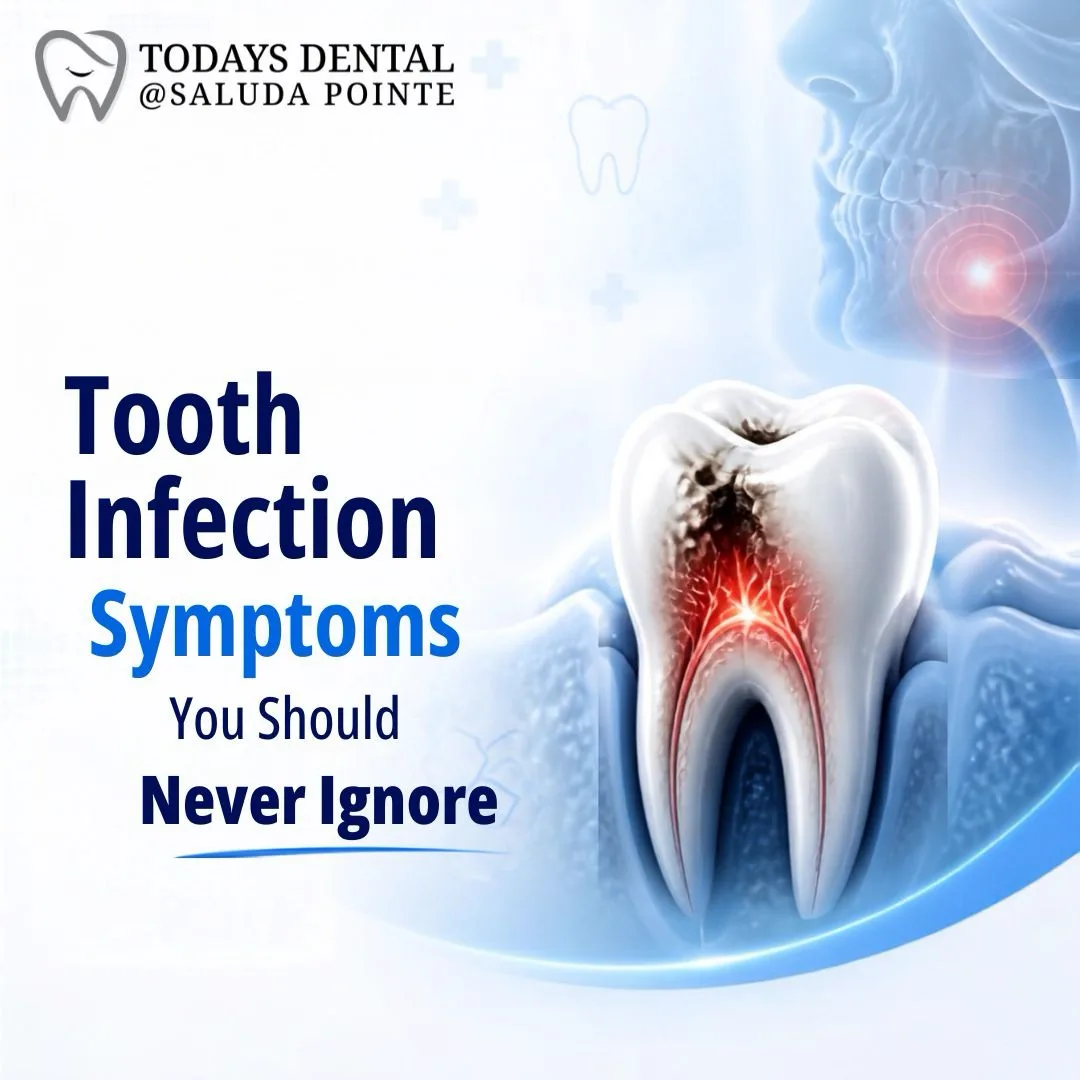
Many people wake up to a sharp toothache and immediately wonder how serious it is. Pain and swelling are the two symptoms that send most patients looking for answers fast — and a tooth infection is one of the few dental problems that genuinely gets worse the longer you wait.
A persistent, deep, throbbing toothache is often the first red flag. Left alone, a tooth infection can bring on swelling, fever, bad breath, sensitivity to hot or cold, and a dental abscess. Below are the symptoms you should never ignore, when to seek emergency dental care, and how to keep an infection from starting in the first place.
Facial swelling is the symptom to take most seriously. It usually means an abscessed tooth, and it needs professional tooth infection treatment rather than another night of painkillers.
Tooth infections escalate quickly. Call a dentist the same day if you have:
Difficulty breathing or swallowing means going to an emergency room, not waiting for an appointment. For everything else, our emergency dentist in Lexington, SC keeps same-day slots open so you can be seen while the infection is still contained. Timely treatment prevents complications and usually means fewer, simpler visits later.
Treatment depends on how far the infection has traveled. Most infected teeth are saved with root canal treatment, which removes the infected pulp and seals the tooth. An abscess may first need to be drained, and antibiotics are sometimes prescribed alongside treatment — though antibiotics alone never cure the problem, because the source of the infection is still inside the tooth. If the tooth is too damaged to restore, extraction is the safer option.
Rinse with warm salt water, use over-the-counter pain relief as directed, keep the area clean, and avoid chewing on that side. A cold compress on the outside of the cheek can ease swelling. These steps buy you short-term relief — they do not treat the infection.
A toothache that keeps getting worse, swelling around the face or gums, fever, sharp pain, or strong temperature sensitivity are the key signs. Visible pus or an abscess counts too — get dental help fast.
If swelling makes it hard to breathe or swallow, or if pain and fever climb quickly, treat it as an emergency. A dental abscess can spread infection to other parts of the body.
A dentist may prescribe antibiotics, perform a root canal, or extract the tooth. A root canal often saves the tooth; antibiotics help control the infection but don't replace treating its source.
Yes. Gum disease lets bacteria reach the tooth root and form an abscess. Treating gum disease with periodontal care protects your oral health and helps stop further infection.
Rinse with warm salt water, use over-the-counter pain medication, and keep the area clean. These steps give short-term relief, but you still need a dentist for full treatment.
When to see a dentist: if pain, swelling, or fever is getting worse instead of better, don't wait it out. Call (803) 399-8236 to book same-day care at Todays Dental @ Saluda Pointe in Lexington, SC.
A toothache that keeps getting worse, swelling around the face or gums, fever, sharp pain, or strong temperature sensitivity are the key signs. Visible pus or an abscess counts too — get dental help fast.
If swelling makes it hard to breathe or swallow, or if pain and fever climb quickly, treat it as an emergency. A dental abscess can spread infection to other parts of the body.
A dentist may prescribe antibiotics, perform a root canal, or extract the tooth. A root canal often saves the tooth; antibiotics help control the infection but don't replace treating its source.
Yes. Gum disease lets bacteria reach the tooth root and form an abscess. Treating gum disease protects your oral health and helps stop further infection.
Rinse with warm salt water, use over-the-counter pain medication, and keep the area clean. These steps give short-term relief, but you still need a dentist for full treatment.
Tell us a little about what you need — we'll be in touch shortly.
105 Saluda Pointe Ct Suite C, Lexington, SC 29072, United States
Hi! I'm Tooth fairy! Your AI Assistant Ask me anything