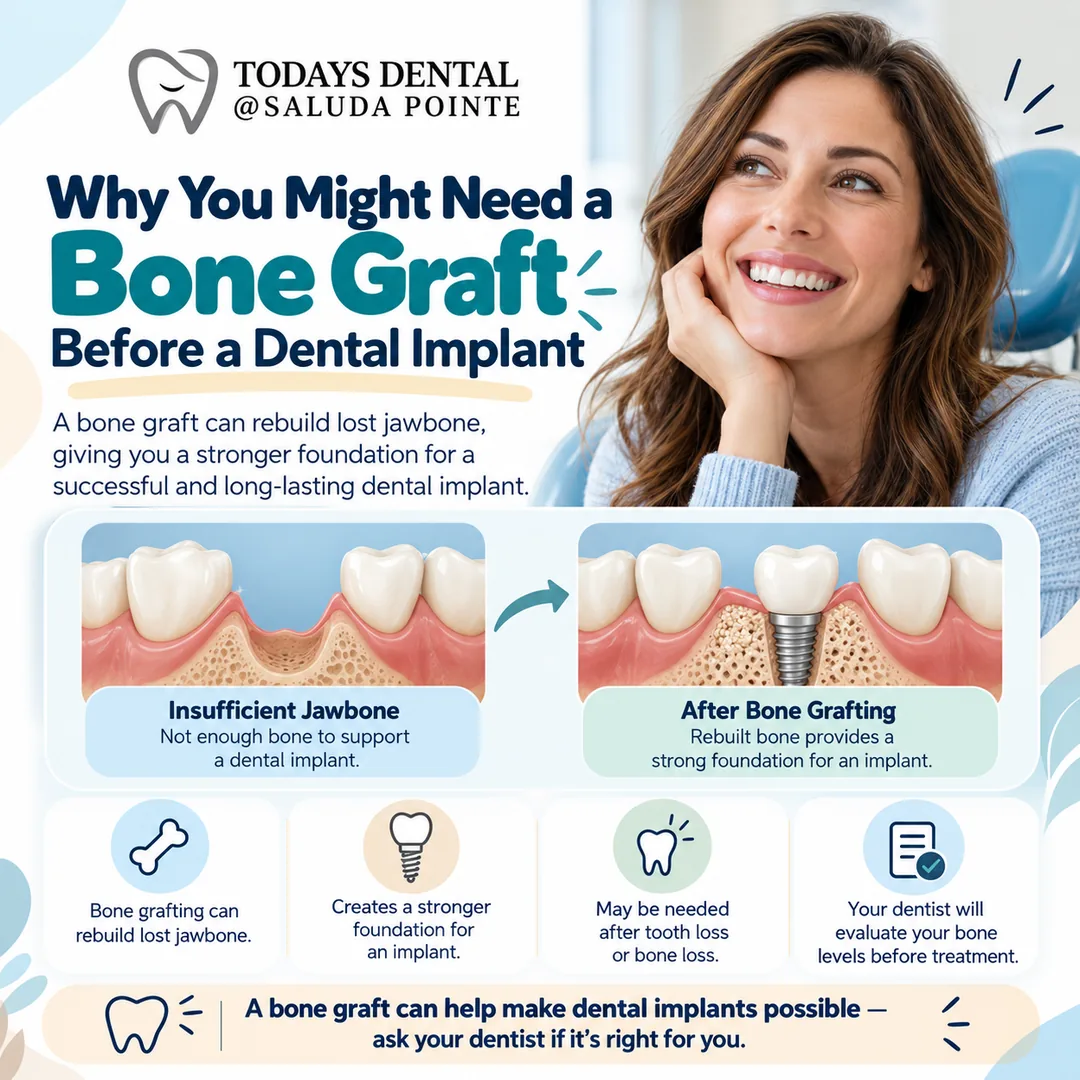
Missing teeth can make eating and smiling harder, but getting dental implants isn’t always as simple as placing a new tooth. Sometimes, your jawbone might not be strong enough for an implant because of bone loss from gum disease or missing teeth.
In many cases, dentists use a procedure called bone grafting to rebuild the jawbone before they place an implant. This step helps create a solid base that gives the implant long-lasting strength.
Here you will know why you may need a bone graft before your dental implant, what happens during the process, and how it improves your chances of success.
Dental implants replace missing teeth by anchoring a titanium implant into the jawbone. A periodontist explains that osseointegration lets the bone fuse to the implant for long term implant stability.
Clinicians recommend a bone graft when the alveolar bone lacks height or width. Many patients get graft material to rebuild weak or thin jawbone tissue before dental surgery.
Patients who faced bone resorption after tooth loss often report clearer chewing after bone regeneration. A dentist checks medical history and image scans to decide if a sinus lift or other grafting technique suits the case.
Skipping a needed bone graft can cause poor implant positioning and reduced stability. Next, reasons a patient may need a bone graft before a dental implant will be discussed.
Many factors can lead to the need for a bone graft before receiving a dental implant. Insufficient jawbone density often occurs due to tooth loss or gum disease, which affects the stability of the implant.
Insufficient jawbone density or volume can complicate dental implant placement. A strong and healthy jawbone is essential for the success of an implant. Without enough bone height or width, a periodontist may recommend a bone graft.
This procedure adds bone material to areas needing extra support. It rebuilds weak or thin jawbone tissue, making it capable of holding an implant securely.
Bone loss often occurs from tooth loss, gum disease, or injury. Patients may face serious complications if they skip a necessary bone graft before their dental surgery. Poor implant positioning and reduced stability are common issues that arise when there isn't sufficient support.
Grafting techniques help regenerate the alveolar bone needed for successful osseointegration with implants. Learning about what to expect from the bone grafting process can ease concerns as patients prepare for dental restoration procedures.
Bone loss can occur due to gum disease, tooth loss, or injuries. This condition weakens the jawbone and makes it less stable for dental implants. A periodontist may recommend a bone graft to rebuild this lost bone tissue. Bone grafts add material where support is necessary for successful implant placement.
Gum disease often leads to bone resorption in the jaw, reducing overall density. Tooth loss also causes nearby bones to shrink over time. Injuries can further damage the structure of the alveolar bone around teeth.
Without intervention, these issues can complicate future dental restoration efforts and affect implant stability significantly.
Strong bone support is crucial for the success of dental implants. A weak or thin jawbone may not securely hold an implant, which can lead to complications. Insufficient bone height or width increases the risk of poor positioning and reduced stability during osseointegration.
Bone loss from gum disease, tooth loss, or injury often creates a need for a bone graft before placing an implant.
Clinicians recommend rebuilding the jawbone with a graft material when necessary. This procedure enhances the foundation for future dental restoration. Over time, the body integrates this new material into existing tissue, improving overall oral health and enhancing implant outcomes.
Patients benefit from having adequate bone density to support their implants effectively; skipping this critical step could result in esthetic issues down the line.
During the bone grafting procedure, a periodontist places the graft material in areas where the jawbone needs support. Patients can expect some swelling and discomfort afterward. Healing takes time, often several months. This process helps create a strong foundation for dental implants.
Bone grafting involves adding bone material to areas lacking support for dental implants. A periodontist often carries out this procedure before placing an implant. The dentist first evaluates the patient's jawbone density and checks their medical history to determine if a bone graft is necessary.
During the procedure, the clinician prepares the graft material, which can come from various sources; including synthetic options or donor bones. The specialist then places the graft in the targeted area of the jawbone.
This process helps rebuild weak or thin tissue and ensures that it can securely hold a future implant. Over time, new bone growth occurs around the graft material, leading to stronger support during osseointegration.
Successful healing creates a solid foundation for effective tooth replacement through dental restoration techniques like implants and sinus lifts.
The healing and recovery timeline after a bone graft varies by individual. Generally, the body needs several months to incorporate the graft material into the jawbone. The integration process is crucial for osseointegration and successful implant stability.
Patients may expect initial healing within two weeks, but complete bone regeneration can take three to six months.
During this time, clinicians closely monitor progress through regular appointments. They assess how well the graft takes hold in the alveolar bone and ensure that oral health remains intact.
Delaying or skipping necessary follow-ups can lead to complications with dental implants later on. Proper care during recovery supports better outcomes for future tooth replacements.
After the healing and recovery timeline, understanding how bone grafting improves implant outcomes is crucial. Bone grafts add vital support to areas lacking sufficient jawbone density or volume.
They help rebuild weak or thin alveolar bone tissue to prepare it for an implant. This process ensures a sturdy foundation increases the chances of successful osseointegration.
Clinicians recommend these procedures when there is inadequate bone height or width for safe implant placement. Skipping a necessary graft can lead to poor positioning and reduced stability of the dental restoration.
The body naturally integrates the graft material with existing jawbone over time, enhancing overall oral health and promoting effective tooth replacement solutions.
A bone graft adds material to the jawbone or alveolar bone after tooth loss. It fights bone resorption and raises bone density. This helps implant stability and supports osseointegration for a strong dental restoration.
Bone resorption shrinks the jawbone. Low bone density can stop implant stability. Without enough bone, the implant may fail to osseointegrate.
A dentist, periodontist, or oral surgeon can do oral surgery or dental surgery. They plan the implant procedure and the graft. They check bone density and treat periodontal disease if needed.
Surgeons use natural or synthetic graft material and a scaffold to guide bone regeneration. They may use a sinus lift for upper back teeth. They pick grafting techniques that fit your jaw and tooth replacement needs.
You heal after oral surgery and dental restoration in weeks to months. You may have pain, swelling, or slow bone regeneration. Good oral health and follow up help osseointegration and implant stability.
No, a graft improves chances but does not guarantee success. Bone regeneration, proper implant placement, and care after the implant matter. Talk to your dentist or periodontist about the best plan for tooth replacement.
Tell us a little about what you need — we'll be in touch shortly.
105 Saluda Pointe Ct Suite C, Lexington, SC 29072, United States

Hi! I'm Tooth fairy! Your AI Assistant Ask me anything